Investing at the Intersection, Built on Infrastructure
Powering AI in an age of anxiety
June 3, 2026 4 Minute Read Time
Overview
Author
Senior Director, Portfolio Strategist

Prefer a PDF?
In a period of uncertainty and elevated inflation, the rapid expansion of generative AI and the data centers that house it has heightened anxiety over the availability of power and rising costs to consumers. We see progress from utilities and local stakeholders as underappreciated, and current solutions to infrastructure deployment as overlooked. As we review today’s data center development, we find:
- Federal policy favorable to data centers, with executive actions focused on permitting and affordability
- At the state level, a rapidly expanding network of “large load tariffs” protecting residential ratepayers from infrastructure costs that could result from the power demands of new data centers
- Data center moratoriums limited to less than 70 of the 20,000 municipalities in the U.S.
- Utilities continuing to sign agreements projecting customer savings and promoting broad community investment.
Taken together, federal support, state tariff frameworks, and utility-hyperscaler partnerships support a generational-level infrastructure buildout. We remain constructive on the utility investment opportunity that data center growth represents.
Federal Support
The data center buildout carries backing at the highest levels of the federal government. In July 2025, the U.S. administration signed an executive order directing federal agencies to streamline permitting reviews, provide financial support, and utilize federal land for the development of data centers.
Equally important is the federal government's recognition of the ratepayer concern that often underpins local opposition. In March 2026, the White House brokered a Ratepayer Protection Pledge, calling on leading hyperscalers and AI companies to build or bring the power needed for development and cover the costs of their infrastructure. While both the Federal Energy Regulatory Commission and individual states are coordinating implementation, the pledge signals a federal posture that seeks to align data center growth with broader consumer affordability and solve one of the most common objections to the new large load opportunities that utilities are expecting.
State Support Through Large Load Tariffs
While the federal government has set the tone, individual states have been using existing regulatory frameworks to facilitate their data center buildouts and protect residential customers.
The primary mechanism has been the “large load tariff,” which is a special rate structure designed to ensure that data centers, rather than existing ratepayers, bear the infrastructure and capacity costs associated with development. In 2025, state regulators approved 29 large load tariffs, compared to just 14 approved between 2018 to 2024.1
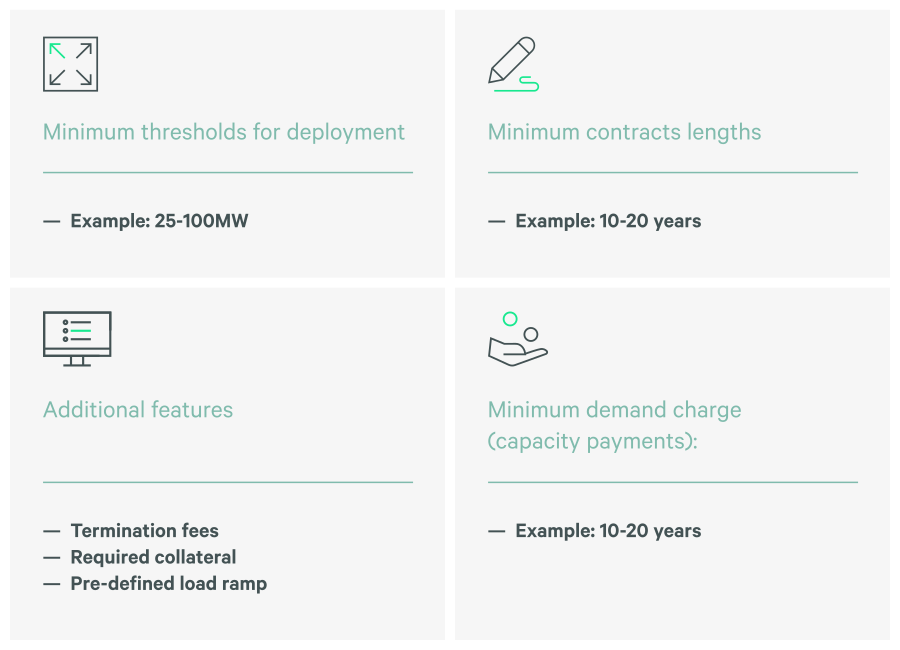
Tariffs vary in specifics but share a common architecture. Most require large customers to commit to minimum contracts of 10 to 20 years, pay for a majority of or all new generation and transmission infrastructure, and post security deposits to protect against stranded costs if a project fails to materialize. The structure serves a dual purpose: it shields existing ratepayers and allows utilities to focus on their highest quality opportunities, excluding more speculative developments that could otherwise inflate their interconnection queues.
Local and State Opposition
Opposition to data centers is real, driven by consistent concerns across geographies. Rising utility bills and a strain on water and land resources can outrun local planning frameworks. In the past year, 12 states introduced legislation that would temporarily ban data center construction, but these efforts have stalled, and moratoriums remain largely at the municipal level. When considering the extent of the current U.S. active/announced/under-construction pipeline, we estimate only 2% of builds have been withdrawn due to community opposition, siting or other factors.2
Local opposition is and will continue to be a factor in data center siting and permitting. But the overall direction of the buildout is not in doubt. Where proper tariff structures are put in place along with early community engagement and customer focused planning, development continues.
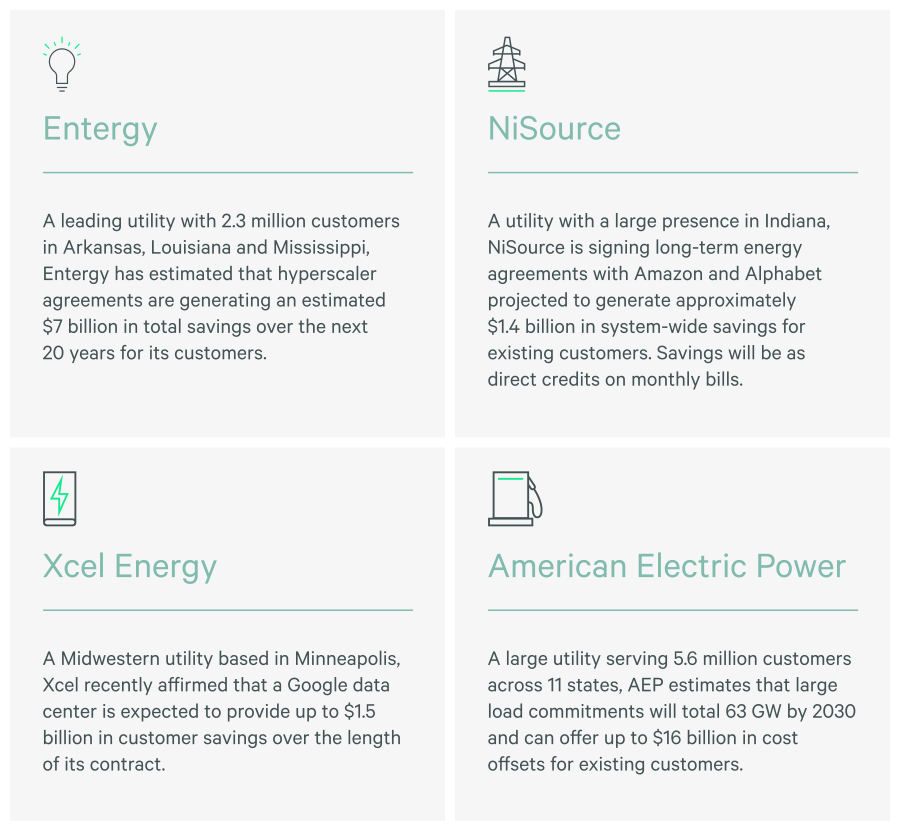
Recently, Pacific Gas & Electric, a large California utility serving areas including Silicon Valley, found more than 10GW of large load demand and estimated every 1 GW of new data center load can reduce existing customer monthly electric bills by 1% or more.
Conclusion
Rapid data center development is one of the most consequential economic investments in over a generation. It impacts utilities, existing consumers and broader stakeholders. As we examine the landscape, we see government, regulators and local utilities working to build the tariff frameworks that can ensure consumer protection. We expect data center development to continue advancing at an accelerating pace, driving a sustained wave of utility investment that represents one of the most compelling long-term growth opportunities in the sector’s history.
2 Wood Mackenzie, “Newly added U.S. data center capacity slows down considerably in Q4 2025, as market struggles to keep up with explosive demand.” —March 2026.