Market Research
Tariffs on the Move: Unpacking Their Impact on Asia Pacific Logistics Markets
September 30, 2025 10 Minute Read Time

Executive summary
Author
Director, Insights & Intelligence

Author
Director, Insights & Intelligence

Quantitative analysis to help mitigate tariff risk in the Asia Pacific logistics market
The global economy is undergoing a period of accelerated transformation, with trade policy shifts—particularly the implementation of tariffs—emerging as a key source of volatility. Tariffs have introduced significant uncertainty for global investors and businesses, with pronounced effects on the logistics real estate sector. This paper explores the extent to which tariffs are reshaping global trade dynamics and the implications for logistics investments. Through a correlation analysis, we identified logistics submarkets in Asia Pacific (APAC) that demonstrate resilience to tariff-related disruptions, with a focus on those supported by strong intra-regional trade flows and robust domestic consumption. While we acknowledge that correlation does not imply causation, the analysis reveals meaningful patterns that can inform investment strategy. Our findings suggest that developed markets such as Japan, Australia and South Korea offer relatively stable environments, underpinned by mature consumption bases and diversified trade relationships.
We recommend prioritizing submarkets characterized by resilient domestic demand and active intraregional trade. Investing in modern, sustainable logistics facilities will be critical to ensuring long-term viability and adaptability in a shifting global landscape.
U.S. tariff impact
Emerging Asian markets subject to the highest U.S. tariffs
According to tariffs announced on April 2, 2025, also known as Liberation Day, emerging markets—particularly China and Southeast Asian countries, excluding Singapore—are bearing the brunt of these measures, with tariffs exceeding 40%. Although Vietnam and the U.S. recently reached a tariff agreement, the imposed rate is 20%, and 40% for transshipment from China. In contrast, developed markets such as Australia and Singapore are subject only to the baseline tariff rate of 10%, reflecting a more favorable trade relationship or strategic exemptions.
However, the true extent of the economic impact will depend on several evolving factors: the duration of these tariffs, the nature and scale of any retaliatory measures taken by affected countries and the outcomes of ongoing or future negotiations with key trading partners. These dynamics will ultimately shape the long-term implications for global trade flows and investment strategies.
U.S. export dependency by Asia Pacific markets and tariff changes
Export dependency varies widely across APAC economies, shaping their exposure to shifts in external trade policy (Figure 1). Vietnam stands out as one of the most U.S.-export-dependent markets in the region, with shipments to the U.S. accounting for approximately 30% of its GDP in 2024, according to IMF estimates. In contrast, Australia is among the least dependent, with goods exports to the U.S. comprising just 5% of its total goods exports and only 0.9% of its annual GDP, based on data from the Australian Bureau of Statistics. This divergence in trade reliance has important implications under the evolving U.S. reciprocal tariff framework, which poses heightened risks for more trade-reliant economies. At the same time, Asia’s trade connectivity with China is under increased scrutiny, particularly around transshipment activities that may be subject to additional penalties.
Figure 1: Asia Pacific exports to the U.S., 2024, US$ in billions and % of GDP
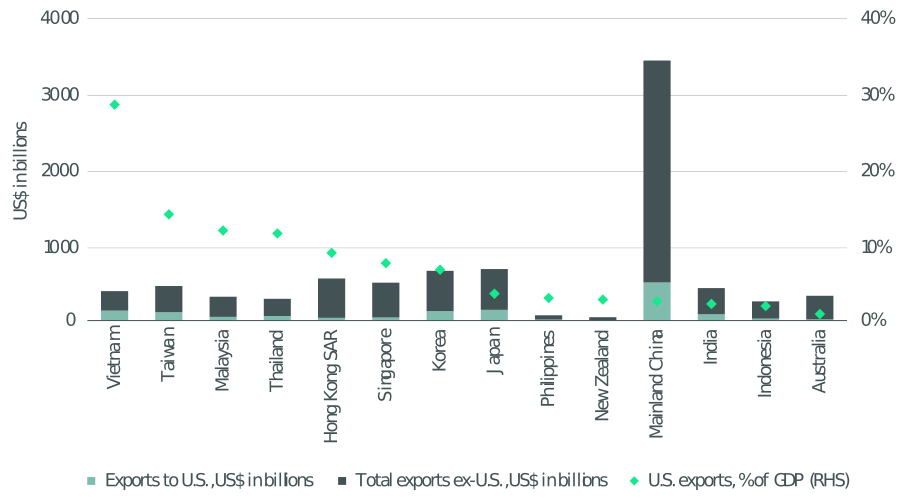
The global tariff landscape remains highly fluid, with major developments leading up to the August 1 deadline. The U.S. and EU have reached a preliminary agreement to impose 15% tariffs on European goods, including automobiles. Additional tariff measures taking effect from August 7 include: 25% on Indian goods plus an additional 25% penalty for buying Russian oil, 20% on Vietnamese goods, 19% on Indonesian and Filipino goods, and 15% on Japanese and South Korean goods. The U.S. also plans to impose a 100% semiconductor tariff on all imported semiconductors although some companies will be exempted.
U.S.–China trade negotiations continue without a finalized agreement. The outcome of these talks and detailed trade agreements will be pivotal in shaping the broader trade and investment climate across the region. The magnitude and duration of these tariffs will have far-reaching effects on supply chain costs, trade flows, and ultimately, economic growth. Given the uncertainty, we will continue to monitor policy developments closely and prioritize markets with more stable trade regimes and diversified demand drivers.
U.S. imports from China—the first Trump administration
To evaluate the impact of tariffs on global trade flows, it is worth analyzing changes in trade volumes during the first Trump administration. During the first Trump administration, the U.S. imposed multiple rounds of tariffs on Chinese imports, ranging from 7.5% to 25%.
Research by Chad P. Bown of the Peterson Institute for International Economics indicates that the trade war had its most pronounced impact on imports from China subject to the highest tariff rates. By the end of 2022, U.S. imports from China of goods facing a 25% tariffs were 24% below pre-trade war levels, while imports of those goods from other countries increased by 40%. For products under the 7.5% tariffs, imports from China were 7.5% below August 2019 levels, whereas imports from other countries surged by 46% over the same period. Interestingly, U.S. imports of products never hit with trade war tariffs increased by 42%.
Intraregional trade
Shifting trade dynamics: China and the U.S. post the first Trump administration
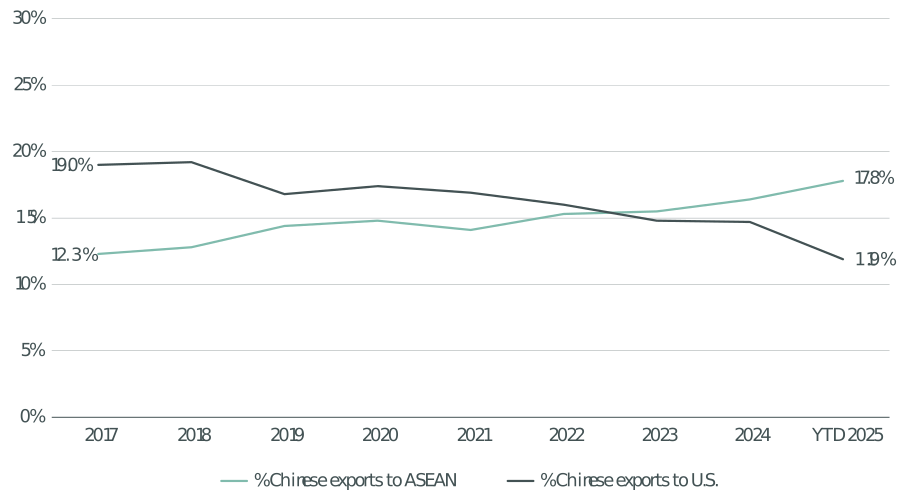
The imposition of tariffs under the first Trump administration marked a turning point in the geographic composition of China’s export markets. Since the onset of those trade measures, the share of Chinese exports directed to the United States declined, reflecting the disruptive impact of escalating trade tensions and tariff barriers. In response, China strategically reoriented its export focus toward regional partners, particularly the Association of Southeast Nations (ASEAN) member states. This shift signifies a deliberate effort to diversify export destinations and reduce reliance on the U.S. market (Figure 2).
From the U.S. perspective, imports of goods from China have continued to decline due to trade tensions and supply chain diversification efforts. In contrast, U.S. imports from other countries—most notably ASEAN—have increased sharply, with the region becoming a key alternative sourcing hub.
Figure 2: China’s share of exports to Association of Southeast Nations versus the U.S., % of Chinese exports
Intraregional trade to help mitigate tariff risks
Intraregional trade continues to play a pivotal role in shaping the economic landscape of the Asia Pacific region. Over 50% of both imports and exports within APAC occur between countries in the region (Figure 3).
This high level of intraregional trade reflects not only geographic proximity but also the increasing integration of production networks, particularly in sectors such as electronics, machinery and intermediate goods. The Regional Comprehensive Economic Partnership (RCEP), the world's largest free trade agreement, strengthens APAC country ties by reducing tariffs and harmonizing standards. This intraregional focus, supported by RCEP, creates a more self-sustaining and interconnected economic bloc, offering resilience against global trade uncertainties and supporting long-term growth.
Figure 3: Intraregional trade is significant and accounts for the majority of trade in the region, Asia Pacific trade partners, 2024

Building resilience in a shifting trade landscape
Submarket strategies to build resilience
In this increasingly volatile global trade environment, resilience has become a strategic imperative for logistics investors and occupiers. One of the most effective buffers against external shocks—such as tariff risks and supply chain disruptions—is domestic consumption. To explore this thesis, we conducted a cross-market analysis of major logistics hubs, examining how net absorption in logistics real estate correlates with various macroeconomic indicators such as GDP growth, retail sales, consumer spending and exports, etc.
While correlation does not imply causation, understanding these relationships offers valuable insights into demand drivers and helps inform submarket-level strategies. Based on our findings, we developed tailored approaches across key Asia Pacific markets:
Japan: Infill submarkets driven by domestic consumption
In Japan, our strategy centers on infill submarkets that are closely tied to domestic consumption. The country’s internal logistics network—serving its own economy—offers a degree of insulation from external trade shocks, particularly those stemming from U.S. tariffs.
Key segments such as last-mile delivery, e-commerce logistics and regional trucking are supported by structural trends including an aging population and the continued rise of online shopping. The cold chain sector, encompassing the network of refrigerated transportation and storage needed to maintain temperature-sensitive products from production to consumption, also demonstrates resilience, since much of its activity is domestically oriented or linked to intra-Asian trade.
In Greater Tokyo, we focus on inner submarkets such as Tokyo Bay and Gaikando, which show the strongest correlation between consumption and logistics absorption (Figure 4). These areas are well-positioned to benefit from stable, consumption-driven demand.
Figure 4: Correlation between national private consumption and logistics absorption, Q1 2015-Q1 2025, quarterly, one quarter lag
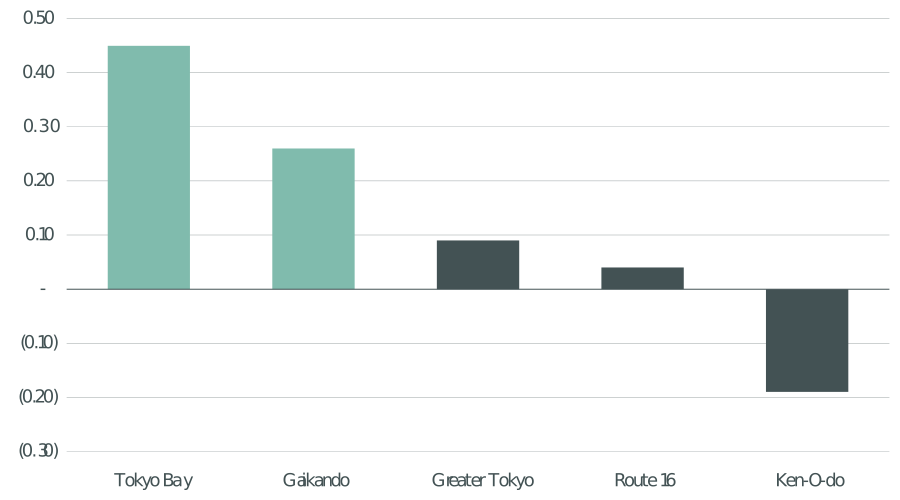
Source: CBRE CREIS, Q1 2025 and Oxford Economics, May 2025.
Australia: Flexibility in the face of global trade uncertainty
Australia presents a unique case where logistics net absorption shows the strongest correlation with GDP growth among the markets analyzed. While the country currently enjoys relatively low average tariffs (baseline 10%), its exposure to global trade dynamics remains a risk.
To mitigate this, our strategy emphasizes warehouses that can be subdivided into smaller, more flexible warehouse units. These spaces allow occupiers to remain agile amid uncertainties. They offer:
- Leasing flexibility
- Lower upfront capital requirements
- Scalability for GDP-sensitive tenants
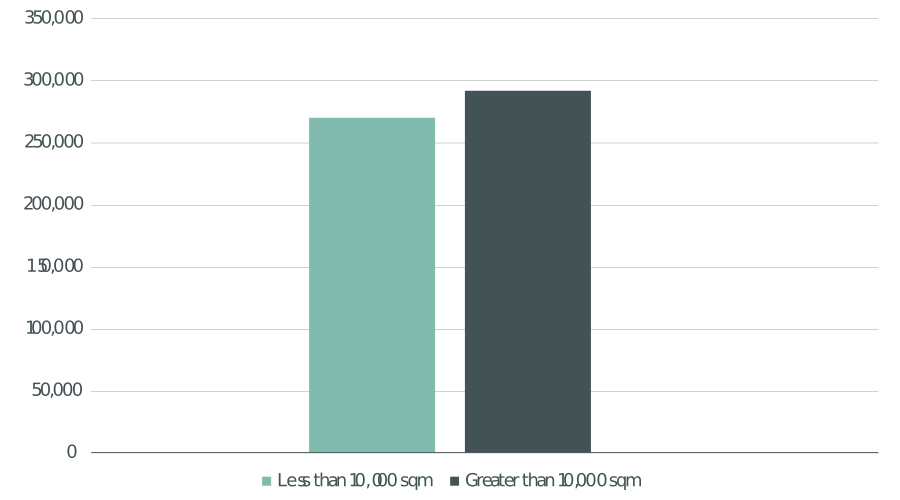
Notably, 68% of leases signed in Q1 2025 were for smaller units, with strong demand from wholesale and manufacturing tenants seeking operational agility in an uncertain trade environment (Figures 5 and 6).
Figure 5: Number of Australian industrial and logistics leases signed by size of lease in Q1 2025
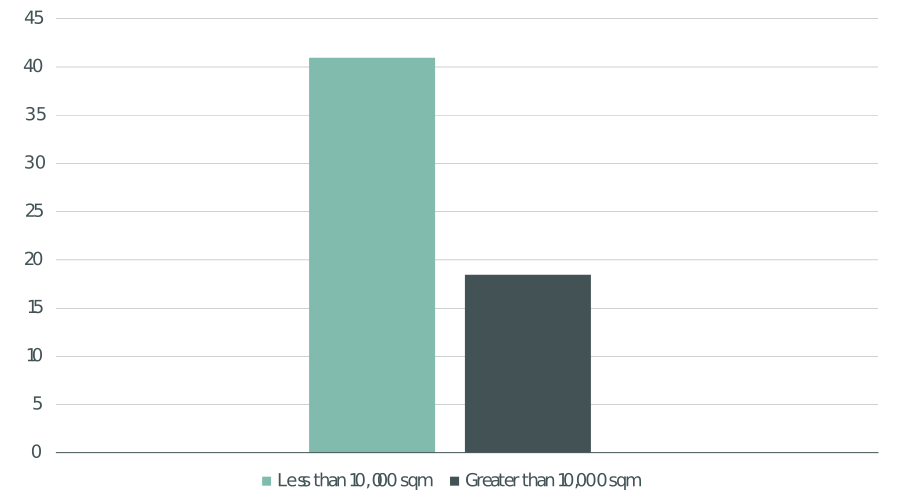
Figure 6: Total sqm of Australian industrial and logistics leases signed by size of lease in Q1 2025
China: Consumption-driven stability in greater Shanghai
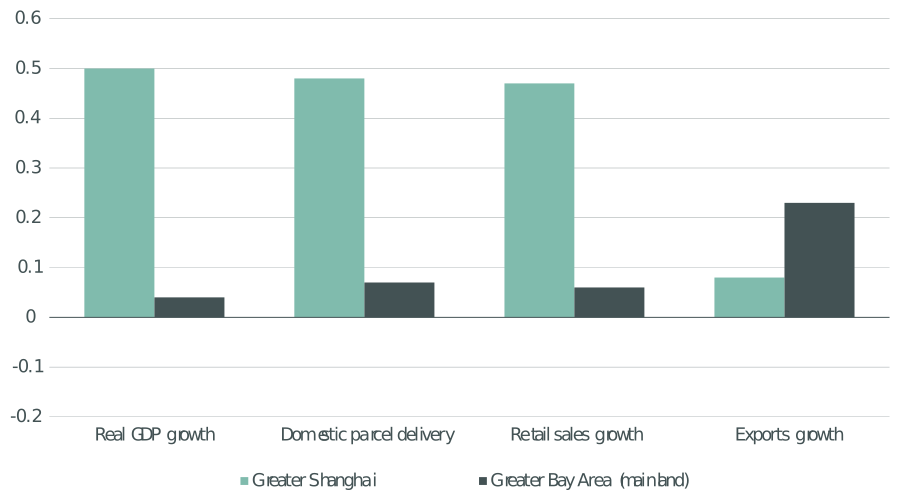
In China, our focus is on Greater Shanghai, where logistics demand shows strong correlation with real GDP growth, domestic parcel volumes and retail sales, compared to a lower correlation with exports. This highlights the market’s sensitivity to domestic consumption trends (Figure 7).
From a supply-side perspective, Greater Shanghai also presents lower supply risks compared to the Greater Bay Area, making it a more stable and responsive market for logistics investment. These characteristics position the region as a strategic hub for consumption-led logistics growth. Despite the lower supply risks in Greater Shanghai, the overall logistics market is still faced with double digit vacancy. Submarket selection is crucial. While some areas benefit from limited new stock and stable demand, others are still absorbing past oversupply. Investors must, therefore, prioritize locations with constrained future supply, strong infrastructure and proximity to end-users.
Figure 7: Correlation of macro indicators vs. logistics demand
Source: JLL, CBRE, Oxford Economics, National Bureau of Statistics, May 2025.
South Korea: Targeted submarket strategies amid export dependence
South Korea’s logistics sector has faced elevated supply pressures since 2022. However, recent interest rate cuts, declining construction permits and falling starts have begun to ease supply-side constraints, prompting renewed investor interest.
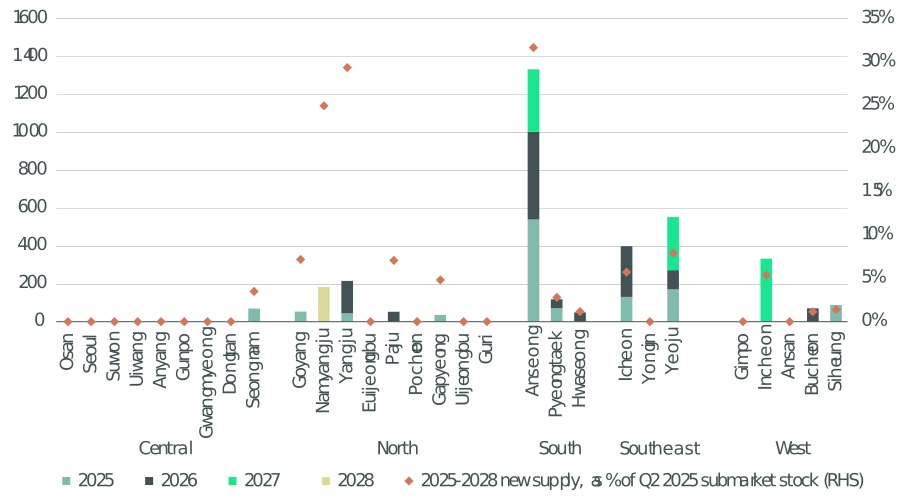
Given South Korea’s export-reliant economy, we advocate for a micro-level approach that prioritizes submarkets with strong e-commerce and 3PL demand and lower dependence on exports. Areas such as southeast Greater Seoul (Icheon/Yongin) and western Greater Seoul (Gimpo/Incheon) offer more resilient demand drivers and reduced supply risks (Figures 8 and 9).
Figure 8: Correlation of macro indicators vs. logistics demand

Source: CBRE IM, JLL REIS, Oxford Economics, May 2025.
Figure 9: 2025-2028 new supply analysis for projects under construction only, sqm in thousands
Source: CBRE IM, JLL REIS, August 2025.
Strategic positioning in APAC logistics amid uncertainty
Our approach integrated rigorous quantitative analysis with qualitative insights sourced from our on-the-ground investment teams across Asia Pacific. This dual perspective enabled us to identify resilient market dynamics and emerging opportunities with greater precision despite tariff turmoil.
Given ongoing macroeconomic and geopolitical uncertainties, we recommend a strategic focus on key developed logistics markets such as Japan, Australia and South Korea within the region. These markets—characterized by robust domestic consumption and strong intraregional trade flows—offer a more stable demand base and are better positioned to absorb external shocks, including tariff-related risks. By allocating capital in these resilient economies, we aim to enhance portfolio defensiveness while maintaining exposure to long-term structural growth drivers in the logistics sector.