Investment Perspectives
Five Opportunities in U.S. Core Real Estate
August 23, 2024 10 Minute Read Time

Interested in self storage investing? Click here for more self storage market insights.
U.S. core real estate investment markets remain supported by strong secular trends with substantial growth potential. Real estate sectors and markets are evolving to respond to demographics, changing consumer behaviors, and technology-driven growth. These drivers shape our highest conviction investment ideas across sectors and themes. In this article, we summarize five of our high conviction investment ideas within U.S. core real estate.
1. Attainable rental housing
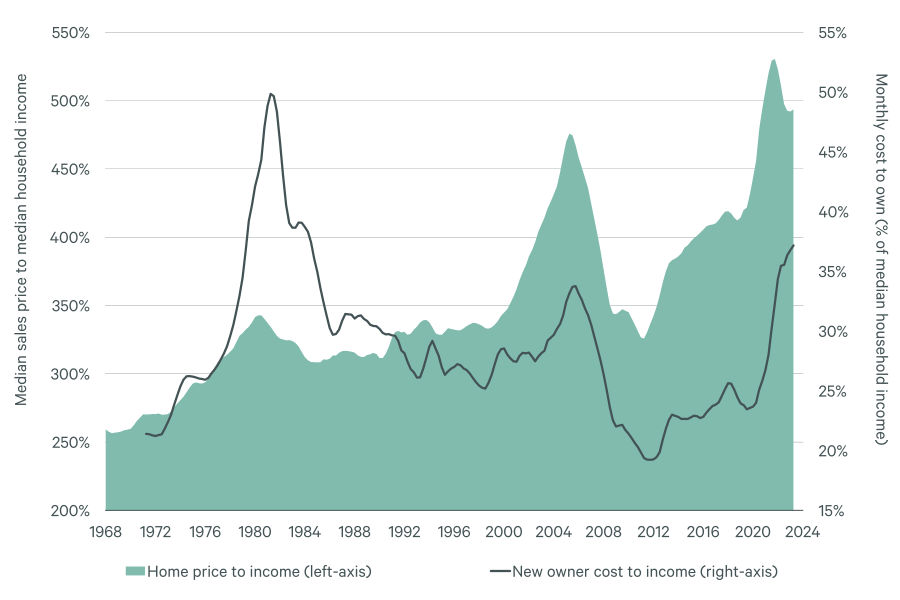
Attainable rental housing addresses the growing need for affordable living options amid rising nominal home prices, higher mortgage rates and student debt loads that have put homeownership out of reach for most and driven more households to rent by necessity. One way to quantify housing affordability is to compare the cost to own to the median household income. Since 2019, the income required to qualify for a mortgage on the median priced home doubled, while the monthly cost to own increased from less than 25% of the median household income to more than 37%, the highest ratio in 40 years (see Chart 1). At the same time, private residential fixed investment, including new development and renovation of existing properties, failed to keep pace with demographic growth and the need to replace/renovate aging inventory. The overall lack of affordable housing, including rental options, has even begun to weigh on the rate that adults form households, leading to a rise in multigenerational households, even as a strong labor market supported real wage growth in recent years.
Chart 1: U.S. faces the worst housing affordability crisis in 40+ years
Home price and monthly owner cost as a % of median household income
Source: U.S. Census Bureau, NAR, Freddie Mac, CBRE IM. Retrieved from Moody’s May 1, 2024. Data as of Q1 2024. For illustrative purposes only. Current market conditions differ from prior market conditions, including during prior periods of stress and dislocation. There can be no assurance any prior trends will continue.
The type of housing available and demographic trends are also mismatched, as large homes in low-density neighborhoods are increasingly allocated to empty nesters and there are not enough attainable housing options where it is needed most[1][2]. It will take a decade or more of above-trend housing development to make up for the deficit of physical investment that occurred over the past 10-15 years. Financing constraints, escalating construction costs, disruptions in supply chains and tight labor markets have actually reversed all development momentum, taking us further from solving the supply shortage.
Given the acute affordability challenge that many households face, we favor investing in rental housing options that support a sustainable rent-to-income ratio compared to the national average. As a result, we have been able to execute positive lease trade-outs despite market softening. As home ownership becomes less accessible, attainable rental housing offers a critical solution.
This solution is aligned with renter demand and offers investors a pathway to sustainable long-run rental income growth. Affordable rental housing demand will remain supported by economic constraints and demographic shifts, ensuring a stable tenant pool and cash flows. Investment in the sector addresses the societal need for accessible housing while generating consistent rental income for core investors.
2. Modern logistics
Modern logistics facilities are purpose-built to meet the demanding requirements of today's e-commerce giants, third-party logistics providers, global retailers and advanced manufacturers. The explosive growth of U.S. e-commerce—projected to account for 34.9% of total retail sales by Q4 2034—is a major driver for modern logistics facilities. The rise in online sales has necessitated a greater proportionate share of annual costs dedicated to maintaining omnichannel platforms, driving the need to reduce per-item costs in warehouses. E-commerce fulfillment requires faster order processing and quicker delivery times.
Modern facilities, with their advanced design specifications, are better equipped to integrate automation and robotics, resulting in significant cost reductions per item shipped. Evolving customer expectations and environmental regulations necessitate electrifying delivery fleets, which require on-site electric vehicle (EV) charging stations, paired with material power requirements to run automated systems.
The rapid pace of technological innovation highlights the limitations of legacy logistics facilities. Key technical building specifications for modern logistics facilities include:
- Elevated clear heights to maximize storage—cubic versus linear capacity
- Enhanced seamless concrete slabs necessary to support additional cubic capacity and robotic retrieval operations
- Efficient column spacing to facilitate automated product movement
- Advanced infrastructure such as sprinkler systems, on-site battery storage, additional conduit, upsized utility lines and EV charging stations
More than 70% of logistics assets in the U.S. were built before 2000, and 26% are more than 50 years old. Only 15% of total U.S. logistics buildings have been constructed since 2010. Modern logistics facilities have captured all of the net absorption since 2018, while legacy logistics facilities have lost occupancy. Retrofitting older facilities to meet modern logistics demands is challenging—they often fall short of the needs of modern tenants. Despite high space demand over the past 12-24 months amid tight market conditions, the shortcomings of the older buildings are becoming more apparent. Some occupiers have acquiesced to less-than-ideal space on a short-term basis, waiting for more suitable facilities to become available. Occupier demand has clearly favored best-in-class modern logistics facilities, which represent approximately 16% of existing U.S. stock.
Chart 2: Logistics stock by vintage decade
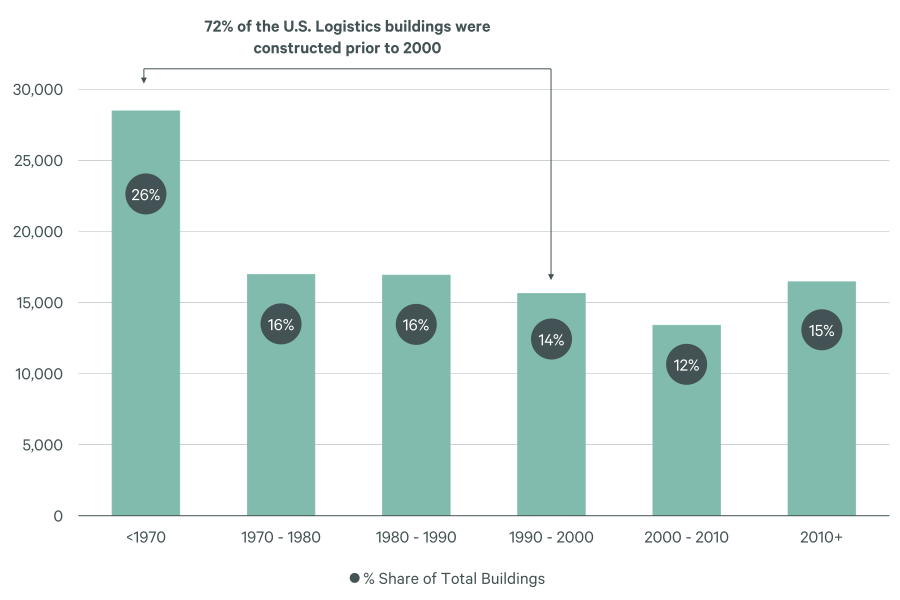
Chart 3: Annual net absorption by vintage through Q1 2024 (sf millions)
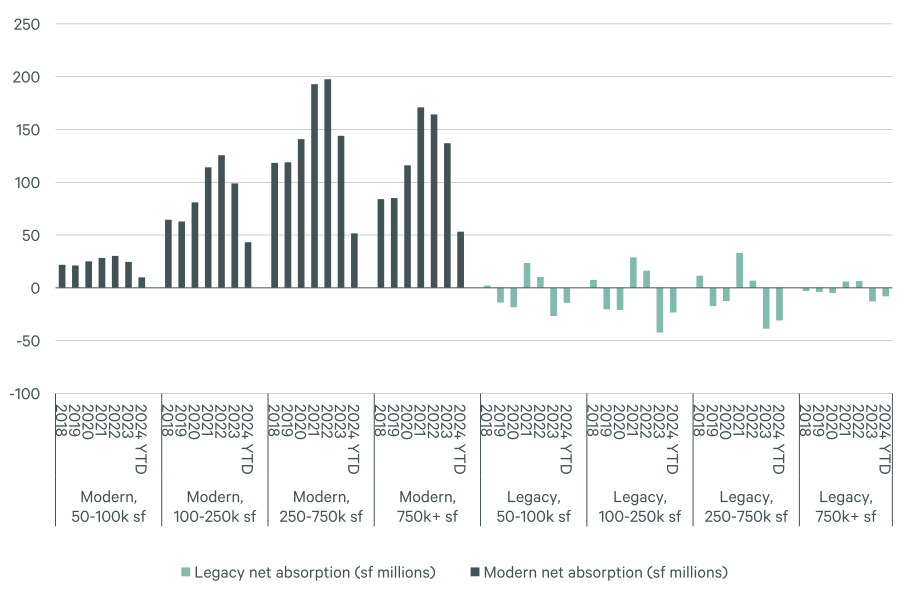
E-commerce growth trends, coupled with the need for operational efficiency and sustainability, have fueled growth in modern logistics demand. The scarcity of modern facilities, combined with the limitations of legacy stock, has led to a bifurcation in the sector with traditional legacy stock trending differently than modern stock. Modern logistics is becoming a high-conviction investment thesis for U.S. core investors. There is a significant demand for new modern logistics development, while older stock continues to lose occupancy. Investors should focus on identifying national-scale developers with substantial balance sheet capacity to execute large-scale joint ventures across multiple markets.
3. Rise of alternatives
By investing in alternative real estate sectors, core investors can capitalize on broad secular demographic and technological changes that are rapidly reshaping the new knowledge economy. Alternative real estate sectors that best capture these structural tailwinds include data centers, self storage, life science and medical offices, as well as student housing and single-family rental. While these sectors have long been significant in the public investment universe, achieving scale in direct private real estate markets has been challenging.
In April, NCREIF identified these sectors with discrete classifications and upgraded self storage as an independent category alongside the traditional four. This change is significant, comparable to a stock rising in size and prominence to warrant inclusion in the S&P 500 index. The inclusion of these alternatives in NCREIF will boost returns in these sectors.
Economic tailwinds support these emerging sectors representing enduring changes in how real estate is utilized and valued. Data centers have become foundational assets in the digital economy, driven by the exponential growth of data generation and storage needs. Self storage capitalizes on American tendencies toward accumulation and the need for additional storage space. Life science and medical offices are experiencing heightened demand due to advancements in medical research and biotechnology, necessitating specialized facilities to support research and development or the need to provide in-person care in offices with specific fit-out requirements respectively. In residential markets, the increased preference for renting over owning, driven by demographic, economic and lifestyle factors, supports the growth of single-family rental and student housing markets. Growing enrollment in large public universities is boosting demand for student housing.
Chart 4: NCREIF NPI allocation, traditional versus emerging sectors
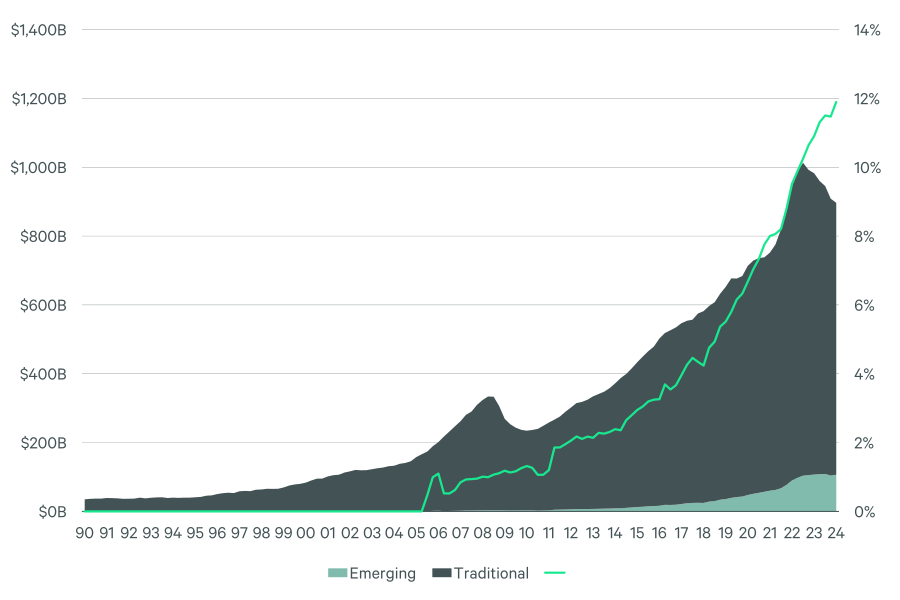
Alternative sectors add diversification and alpha to returns. For core investors, these growth sectors provide the opportunity to create value and capitalize on strong pricing fundamentals, deliver consistency of income and counter-cyclical downside protection, while enhancing portfolio diversification.
4. Redemption pressures for open-end funds
Open-end funds in the U.S. real estate market are experiencing redemption pressures driven by rising interest rates and inflation concerns similar to trends observed in Europe. These pressures are causing investors to reassess their portfolios, leading fund managers to divest more liquid assets to protect fund returns and increase cash reserves over time, rather than becoming distressed sellers. This trend has already brought some prized prime assets into play that rarely come to market.
We anticipate that large open-end funds will engage in a significant volume of non-distressed asset sales, which will become more visible over time. The U.S. market may also see some forced sales due to distressed capital stacks, further increasing the availability of highly attractive assets.
Agile investors with capital and the ability to navigate complex transactions can benefit from these rare trading windows to acquire high-quality assets at attractive valuations. The ongoing low liquidity environment will favor cash-rich investors who can act quickly, reducing competition from debt-dependent opportunistic funds and leveraged private equity buyers. Now is the time for savvy investors to be vigilant and responsive as prime core assets become available.
5. Sustainable valuations and value creation
In today's highly competitive real assets market, institutional landlords recognize the critical importance of meeting ever rising tenant expectations. Integrating sustainability features and advanced technology can create substantial additional value in existing assets. Strategic capital expenditures can future-proof buildings, ensuring sustained tenant demand and bolstered asset valuations over the long term.
Value creation in real assets begins with prioritizing energy and resource efficiency. Initiatives such as installing energy-efficient systems, smart technologies, solar panels, and EV charging stations not only reduce operating expenses but also increase net operating income, thereby enhancing overall asset values. These enhancements not only benefit property owners but also improve the tenant user experience. Energy-efficient and wellness-oriented spaces equipped with modern amenities like EV charging and renewable energy solutions foster productivity, attract talent in a competitive labor market, optimize supply chains and ultimately create economic value.
Operational efficiencies are particularly advantageous in properties with triple net leases, where tenants cover operational costs. For assets where landlords bear these expenses, sustainable upgrades directly contribute to profitability and asset appreciation, simultaneously driving cost savings and tenant satisfaction.
While regulatory requirements continue to propel sustainability initiatives forward, they also align closely with the economic imperatives of tenant demand. By integrating sustainable features into their portfolios, investors can safeguard against regulatory changes, mitigate rising energy costs and adapt to evolving tenant preferences. This approach not only enhances the financial performance and resilience of real estate investments but also underscores the commitment to sustainable practices in a competitive market landscape.
Conclusion
The U.S. real estate market stands at the intersection of powerful secular trends—demographics, technological advancements, sustainability and evolving consumer behaviors. These dynamics not only shape the landscape today but also present significant opportunities for core investors to create value, enhance portfolio resilience and drive economic growth. As core investors navigate these changing times, aligning investments with the evolving needs of modern occupiers is now an essential strategy for core real assets investing.