Market Research
European Logistics: From Obsolescence to Opportunity
November 18, 2025 10 Minute Read Time
Executive summary
Author
Senior Associate – EMEA Research

The European logistics sector is undergoing a structural transformation driven by e-commerce, urbanization, supply chain reconfiguration and near-shoring. Occupiers are increasingly selective, looking for the best assets in the most optimal locations. However, new development is constrained by geographical, legislative and economic hurdles and, as a result, Europe's logistics market is undersupplied with modern facilities. These forces have propelled industrial real estate performance to record levels, but also pushed the bifurcation of the sector, where occupiers are progressively seeking modern facilities and the obsolescence risk for older stock is increasing.
This report explores:
The strategic importance of modern logistics space
Modern logistics assets—those with advanced specifications, automation readiness, power availability and sustainability features—are increasingly essential. Occupiers have become more selective, seeking these features along with plans for footprint growth (particularly from third-party logistics providers) and locations near centralized regional distribution centers, transportation hubs, strong labor pools and end customers.
Modern logistics facilities are crucial for efficient and future-proofed supply chains. Access to a reliable power source is critical. These facilities offer cost-efficient design through improved insulation, efficient lighting and digital building management systems. Modern logistics assets also incorporate automation and new technologies such as radio frequency (RF), optimization, enhancing flexibility and future-readiness. Occupiers are prioritizing sustainability goals and seeking features including solar panels, energy storage and electric vehicle (EV) charging. Demand for green-certified and net zero ready facilities is rising.
Barriers to delivering modern facilities have resulted in a supply gap
Despite the strong demand for modern logistics assets in Europe, our extensive European supply barriers analysis found three key structural constraints that are shaping development feasibility:
- Geographical constraints: Geographic obstacles give a first indication of a market’s capacity to sprawl and densify, such as natural boundaries, undevelopable land and population density
- Legislative barriers: Legislative barriers gauge the ease of obtaining approval from authorities, such as not-in-my-backyard (NIMBYism) mentality, height restrictions, permitting and fiscal health
- Economic incentives: Economic constraints consider drivers behind a development’s profitability, such as shadow supply and purchasers’ cost
Supply is more constrained in urban areas
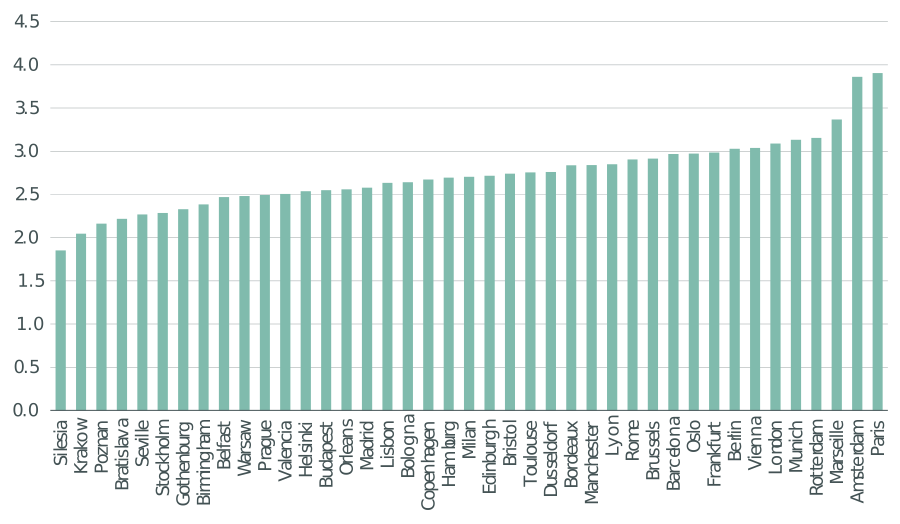
Our analysis found that markets with historic city centers and strict regulation tend to have the highest barriers to supply; Paris, Amsterdam and Marseille are especially constrained. Markets undergoing expansion and in economically liberal countries tend to have lower barriers to supply, and the majority of these are in central and eastern Europe (CEE); Silesia, Krakow and Poznan are among the least supply-constrained markets (Figure 1).
Although the analysis does not separate out urban logistics or big box assets specifically, it is reasonable to assume that closer to built-up city centers, supply is more constrained, given the increased competition for land from many other use classes. As a result, the supply barriers score tends to be higher for urban logistics than big box assets, which tend to be located outside of city centers.
Figure 1: Logistics supply barriers score, 0 = least supply constrained to 5 = most supply constrained
Competition for land use
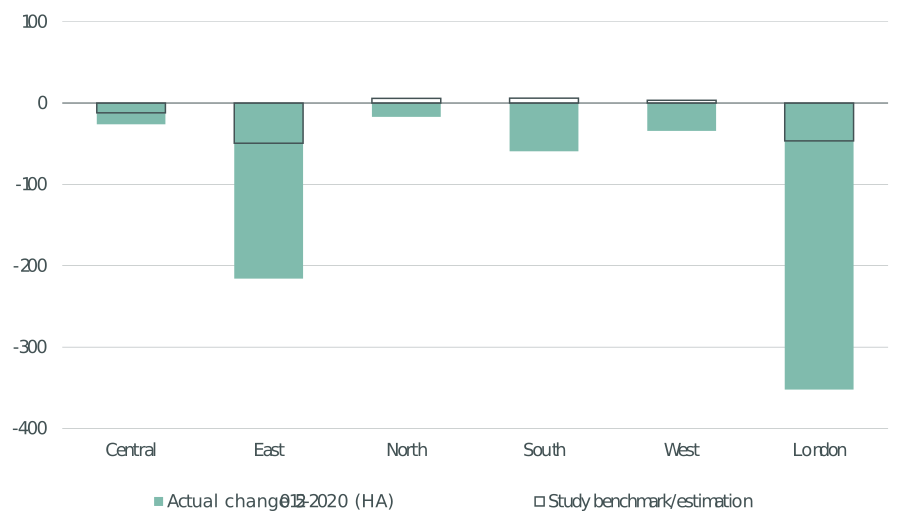
The logistics sector is increasingly competing for land with other use classes—most notably data centers, which require similar fundamentals as logistics—further squeezing available land. The actual amount of industrial and logistics land that has historically been forfeited to other uses is higher than recent estimates (Figure 2). Across all areas of London, industrial land has been shrinking as it is transformed for other uses. Although this is less prominent in Central London than in London overall, even the slightest land forfeited in city centers negatively impacts the already low availability of land in urban areas.
Figure 2: Change in quantity of industrial land in London (2015-2020), benchmark vs. actual release
Brownfield redevelopment is emerging as a strategic solution, but it is complex and capital intensive. As outlined in a previous report, brownfield sites can present a significant financial opportunity for real estate developers, especially for logistics facilities. For those able to navigate the inherent complexities related to environmental legislation and biodiversity gains, these sites are often strategically located and offer significant potential to transform underutilized land into high-value assets.
Significant supply gap
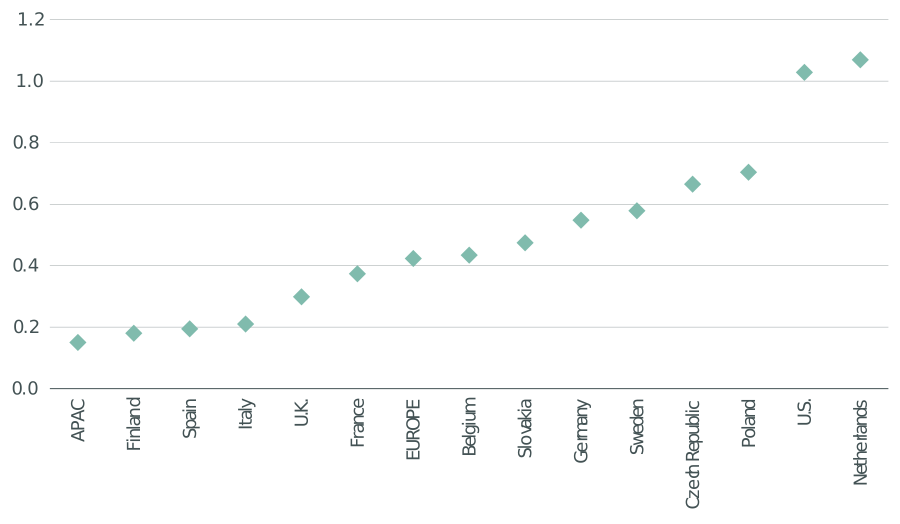
The significant barriers to development have created an urgent need for more modern logistics space across Europe. In our analysis (Figure 3), Europe lags the U.S. in modern logistics space per capita, with the exception of the Netherlands.
Figure 3: Estimated modern logistics space, per capita, square meters (sqm)
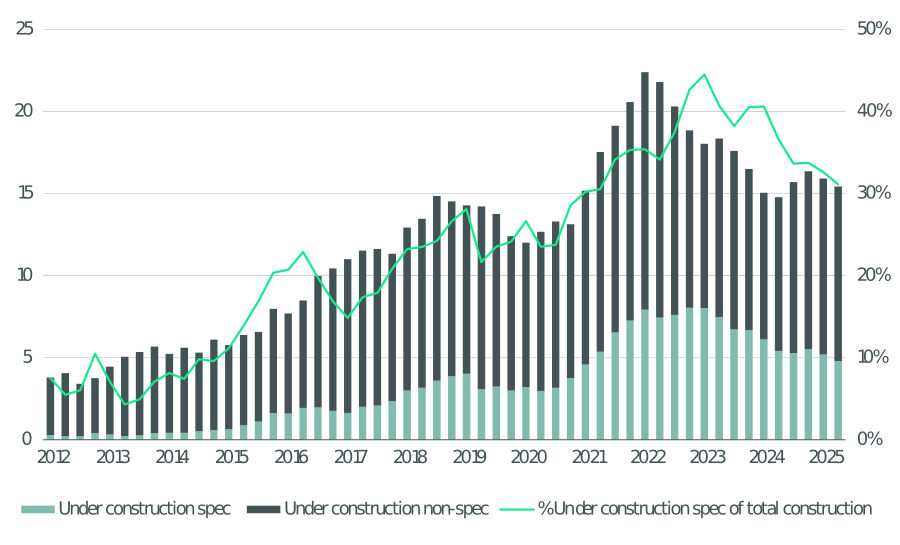
Overall logistics construction activity in Europe is declining (Figure 4), mainly driven by less speculative development. Only 3.8% of European stock was under construction by mid-2025. Speculative development has dropped 74% in France and 54% in the U.K. since the peak in the beginning of 2023. Construction and land costs remain high but are stabilizing.
Figure 4: European logistics construction activity, sqm in millions
The logistics market is bifurcating
Modern assets are performing well while older facilities risk obsolescence
The scarcity of modern facilities, especially in urban areas, is driving a bifurcation in the market. Demand and take-up for modern assets is strong while older facilities struggle with negative absorption.
Older stock has a difficult time meeting modern requirements and retrofitting is often impractical due to structural limitations. As a result, obsolescence risk is rising. In Italy and the U.K., over 80% of new take-up is in modern stock, according to a report by Clarion Partners, while over 80% of vacant space in the Netherlands is second-hand. In the U.K., net absorption over the last few years has been focused on assets built in the 2020s and anything built earlier than the 2000s has seen negative net absorption since the pandemic (Figure 5).
Figure 5: Logistics annual net absorption by year built, U.K., 2021-2025, square feet in millions
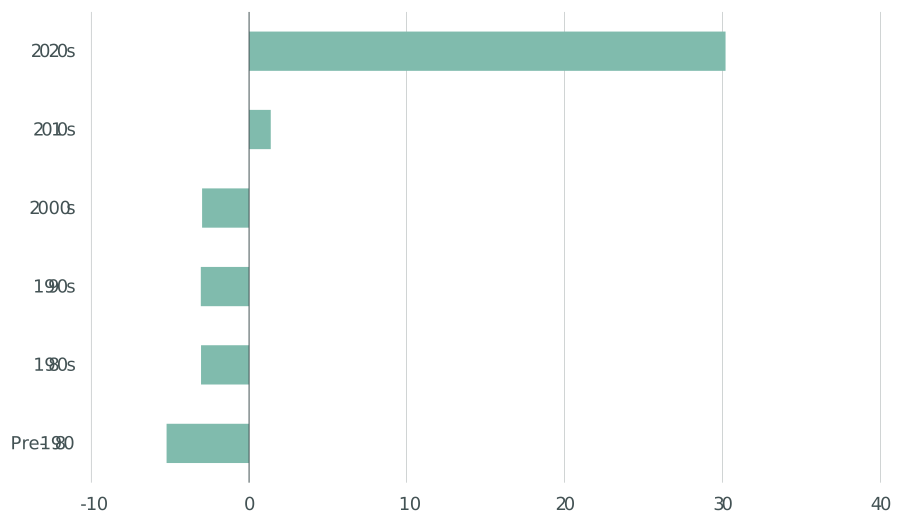
Evidence increasingly points to modern logistics assets delivering a performance premium over older stock. Green Street forecasts that Grade A assets will outperform B/B+ stock in net rental income growth through 2029.
Demand for city centers, supply chain hubs and last-mile logistics locations drives additional bifurcation
The bifurcation is also visible across locations. Occupiers are shifting from price sensitivity to specification-driven decisions, reinforcing the value of modern assets in urban locations and established logistics hot spots and corridors. These supply-constrained, high-demand areas are seeing stronger rent growth and lower vacancy vs. peripheral markets that have more elastic supply and weaker fundamentals.
This trend is likely to continue as the sustained growth of online retail drives demand for logistics facilities that support the supply chain to the end customer. Last-mile logistics, vital in markets with high e-commerce penetration and growing retail spending, are increasingly shaped by infrastructure, geography and the evolving customer experience. Continued growth in online retail and changing consumer expectations will likely lead to a surge in parcel volumes and drive significant expansion in the sector.
This demand fuels the need for urban fulfillment centers designed for rapid throughput with flexible racking, automation, robotics and sustainable infrastructure. Urban logistics strategies must adapt to changing work and lifestyle patterns, including increased residential deliveries and consumer demands for sustainable and flexible options like parcel lockers. Cities are responding with stricter regulations, while less land is available for logistics, driving demand for new logistics real estate solutions, such as edge-of-city depots, inner-city micro-fulfillment hubs and consolidation centers. The optimal real estate strategy varies based on city size and layout, with larger cities requiring a network of facilities.
Ultimately, last-mile logistics is a balancing act between speed, cost, sustainability and access, requiring constant adaptation to the evolving needs of cities and consumers.
CBRE IM’s European logistics scoring (ELS) model
According to our methodology, London is the most suitable last-mile location in Europe, followed by Warsaw, Poznan, Eindhoven and Birmingham.
These top last-mile markets in our ELS model have a high e-commerce penetration and retail spending growth, but also characteristics consistent with a last-mile market’s infrastructure and geography, such as a meaningful proportion of GDP coming from the transportation and storage sector and a large enough population within a 270-minute drive.
Logistics offers investors and developers the potential for strong returns
Logistics fundamentals support continued strong returns
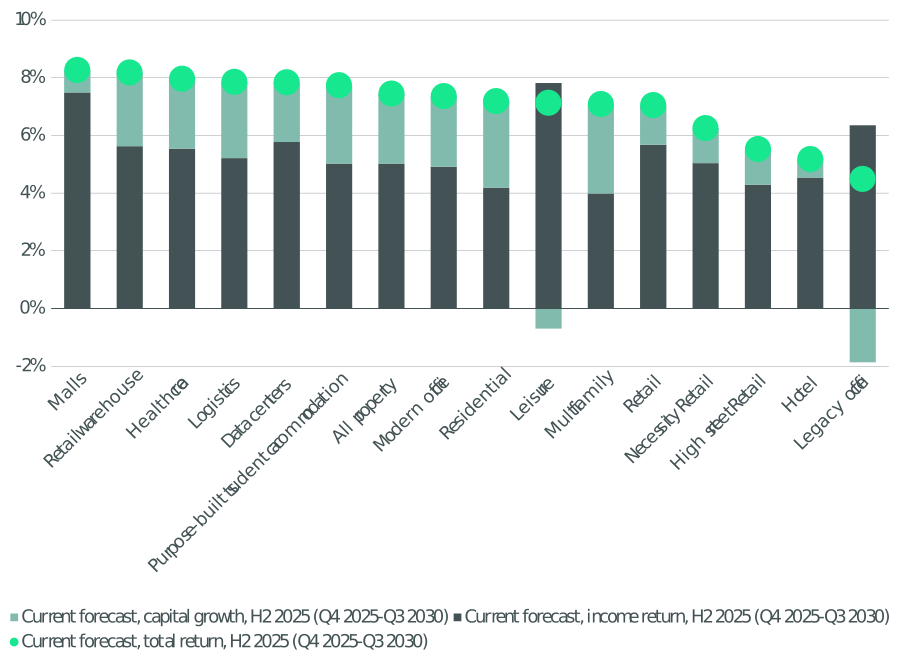
The logistics sector continues to outperform across the European real estate market. In our latest forecasts, logistics returns outperform the all property average (Figure 6). Our strategies focus on providing infill/urban warehouses with modern specifications in major population centers and distribution facilities on key transport nodes that are near consumers and labor pools to increase distribution efficiencies.
Figure 6: Average total return and breakdown, H2 2025, % Y-o-Y
A strong case exists for building modern and flexible facilities to core specifications that meet the latest occupier requirements, and where investors can capture the development yield spread.
Development offers upside potential
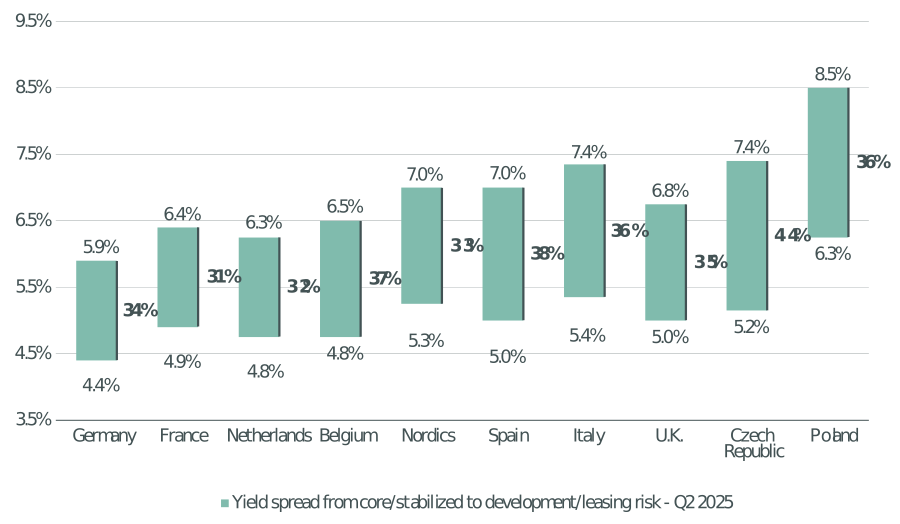
The case for development stands when compared to stabilized returns (Figure 7). Comparing the yield on cost for development (top) and stabilized asset yields (bottom), investors can capture upside potential by taking on construction and leasing risk. All European markets offer an attractive spread over stabilized returns of 30% or more.
Figure 7: Yield on cost for development vs. stabilized asset yields, %
Conclusion
The European logistics sector is undergoing a pivotal transformation, shaped by shifting consumer behaviors, technological innovation and the growing urgency for sustainable operations. A clear bifurcation is emerging between modern, high-specification facilities and older assets that increasingly face obsolescence. Despite strong demand, the supply of contemporary logistics space remains constrained due to geographic limitations, regulatory challenges and economic pressures, making development both necessary and strategic. Brownfield redevelopment presents a compelling value-add opportunity for real estate developers for those who are able to navigate the inherent complexities.
Modern logistics assets consistently outperform in terms of rent growth and operational efficiency, driven by the expansion of e-commerce, near-shoring trends and the need for resilient, low-carbon supply chains. Development offers compelling value creation opportunities, particularly through attractive yield spreads and the ability to meet evolving occupier requirements.
Strategically located urban warehouses and distribution hubs near major transport nodes are especially critical, enhancing last-mile delivery capabilities and supporting dense population centers. To unlock the sector’s full potential, investors and developers must embrace innovation, prioritize sustainability and respond to the changing demands of occupiers. Ultimately, the future of European logistics depends on delivering sustainable, technologically advanced facilities that align with the complexities of modern supply chains.