Real Assets: Fundamentals
Digging Out of the U.S. Housing Affordability Crisis
August 14, 2025 7 Minute Read Time

Executive summary & key calls
Author
Director - Americas Insights & Intelligence

Interested in residential investment opportunities? Click here for more insights on the German housing market.
Housing affordability in the U.S. has reached a crisis level and is dominating U.S. residential market dynamics. In this piece we explore how the situation developed over decades and worsened in recent years, along with solutions to dig out of the housing supply hole and the implications for investors in the U.S. residential sector.
Key call 1: Homeownership is increasingly unaffordable, rentals are a solution
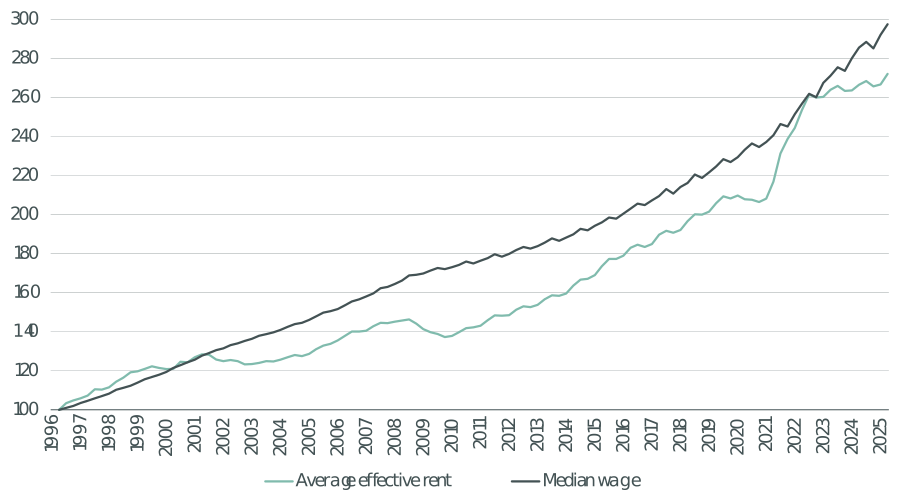
Home prices rose significantly in recent years and affordability has reached crisis levels as incomes did not keep pace and mortage rates soared. Median wage growth, by contrast, kept pace with apartment rent growth over the last six years on net even while significantly trailing the cost to buy, supporting rental demand. Rentals play a critical role in providing access to affordable housing options.
Key call 2: The problem is supply—not enough and the wrong type for current and future demand
The shortage of smaller homes to meet increasing demand from new, smaller and older households is particularly acute. The current demand is a mismatch with the vast majority of existing stock. Development continues to concentrate in the urban core despite structural demand trends that favor the suburbs.
Key call 3: Solutions include a combination of developing smaller houses, refurbishing older houses and expanding medium-density housing outside the urban core
Momentum may be building for reforms that could pave the way for increased densification, more development of smaller homes and retrofiting existing homes in suburban infill neighborhoods.
Key call 4: The affordability crisis will ultimately force increased supply, but near-term headwinds are likely to keep rental markets tight
Recognition of the acute affordability crisis, combined with a broader movement towards deregulation, could break the local zoning gridlock and help the housing market to function properly again. High and potentially rising costs of capital, labor and goods are making it harder to respond. From an affordability perspective, the situation may get worse before getting better.
The housing affordability crisis
U.S. homes have never been more expensive or less affordable
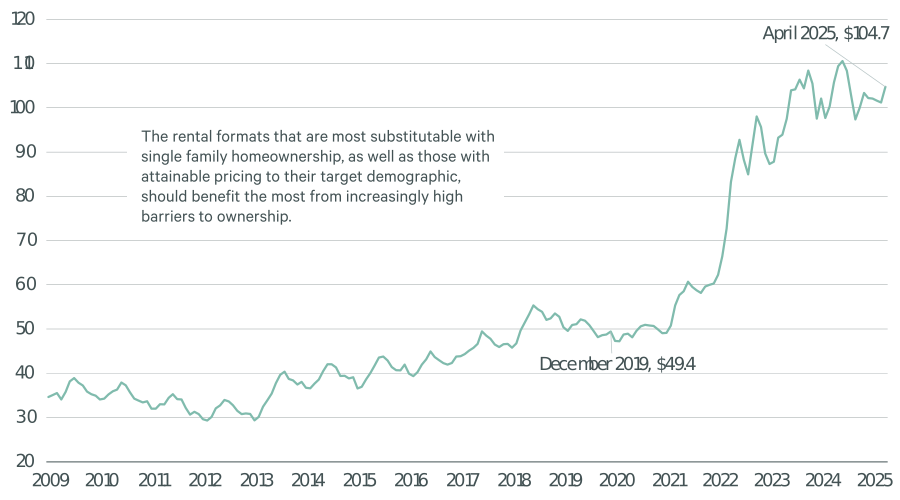
Despite the highest mortgage rates in more than fifteen years, U.S. home prices reached fresh all-time highs in April 2025, according to the S&P CoreLogic Case-Shiller U.S. National Home Price Index. Housing price compared to income is now at an all-time high. Home prices to median household income have risen five-fold. The cost of buying a new home is also hitting new highs since the 1985 peak (Figure 1). Since 2019, the income needed to buy a single-family home has doubled (Figure 2).
Figure 1: Home price to median household income index, 1984=100
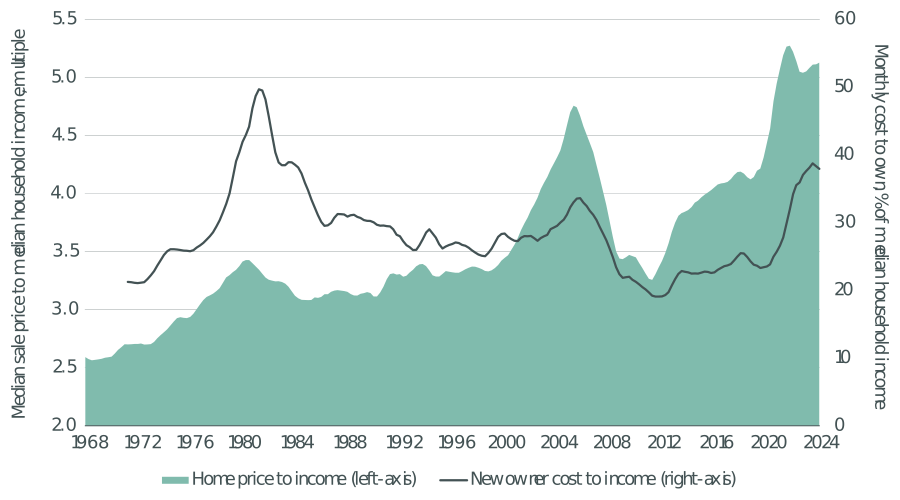
Figure 2: Qualifying income for a mortgage on the median-priced U.S. home, $ in thousands
According to RealPage and the Atlanta Federal Reserve Wage Growth Tracker, respectively, average effective apartment rents and median wages each increased by 32% from Q2 2019 to Q2 2025 (Figure 3). Affordability deteriorated early in the pandemic but three years of stable rents allowed robust wage growth to catch up. Although renters continue to face higher housing costs than before the pandemic, would-be homebuyers are in a far worse situation being largely priced out of the current market. Renting currently makes more financial sense for most households.
Figure 3: Monthly apartment rent vs. median wage index, Q2 1996=100
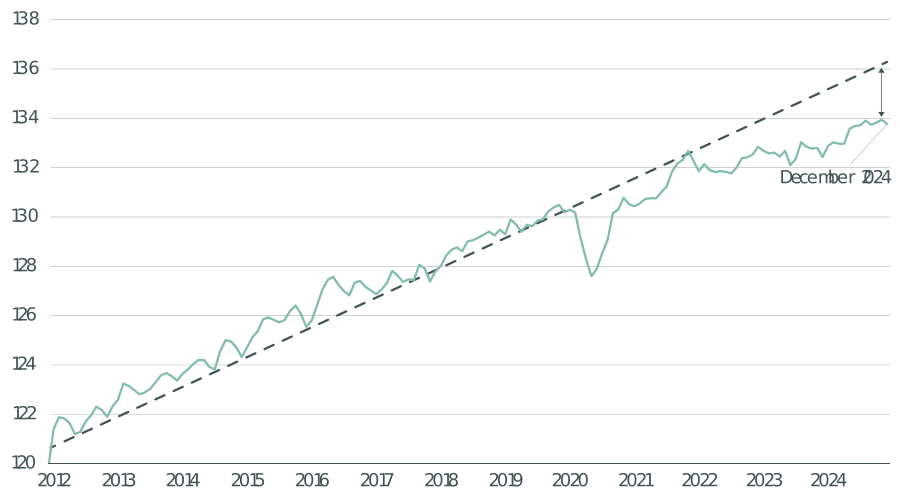
The high cost of ownership reflects strong underlying demand relative to supply. The lack of affordable housing has constrained some household formation in recent years. Had the trend in household formation rate from 2012-2020 continued, two million more households would have formed for the same population (Figure 4). The net result is pent-up demand for housing that will likely offset the effects of slower demographic growth and support housing demand and costs for years to come.
Figure 4: Number of U.S. households, millions
Higher-for-longer interest rates exacerbate the problem, but regulation remains the biggest obstacle
Higher costs of capital, goods and labor impede development activity and exacerbate the issues of supply and affordability. To curb broad-based inflation in the U.S. economy, the Federal Reserve (Fed) aggressively raised interest rates from near zero in early 2022 to 5.25%-5.50% by late 2023. While the policy appeared to succeed in bringing the economy in for a soft landing, the impact on the housing market was decidedly negative.
Rapidly rising interest rates significantly reduced development activity despite strong demand. Total residential permitting fell by more than 20% from December 2021 to December 2022 despite no economic recession, which only occurred twice previously since 1960 (and one was a post-GFC double dip). These circumstances signal a financing issue similar to the 1966 credit crunch, also induced by the Fed, rather than an economic-driven drop in demand.
Higher mortgage rates meaningfully decreased turnover of existing homes leading to even less available supply, while annual existing home sales fell 19% in 2023, close to a 30-year low. New buyers faced significantly higher costs and many would-be sellers were reluctant to give up their low monthly mortgage payments refinanced at record-low rates in the early years of the pandemic. Higher rates may have helped cool inflation but also led to higher homeownership costs and less supply.
A complicated web of local, state and federal regulations, particularly around zoning, continue to be the greatest obstacle to increasing supply. Existing homeowners, who account for two-thirds of households nationwide, are individually incentivized to limit further development in their neighborhoods—also known as not in my backyard or NIMBYism. The tide has begun to shift, particularly as the most impacted states, including California and Massachusetts, begin to push for top-down state mandates to build more housing.
Existing supply does not meet current demand or evolving needs
Over the last five years, developers built close to current demand growth and near the middle of the high- and low-immigration scenarios estimated by the Harvard Joint Center for Housing Studies (Figure 5). CBRE Investment Management’s demand projection for the next 10 years assumes a two million home shortage today (near the lower end of most estimates) and that an additional 200,000 homes will be built per year—in addition to the demand due to population growth and replacement—to close the gap within the next 10 years.
We assume in this projection that development only gradually closes the housing gap over an extended period. There is room to frontload more development earlier in the next decade to close the gap faster. Despite the recent 40-year peak in multifamily development, overall homebuilding was only in line with net new demand and not enough to meaningfully close the shortage.
Figure 5: U.S. housing starts and forward demand projection, homes in millions

The supply shortfall is the most urgent driver of high house prices but a growing mismatch between the existing housing stock and evolving demand also contributes to the problem. For decades, homebuilders increasingly built larger homes for trading up. The result is a dearth of smaller starter homes that are typically under 1,800 square feet (SF) and have three or fewer bedrooms (Figure 6). Recently the trend has changed, as homebuilders realize the gap in the market.
Figure 6: Average floor area of new single family homes, SF

The current housing supply is not well matched to changing demographics
Most of the demographic changes point in the same direction: a need to increase the supply of smaller homes. Households in the near future are likely to be smaller for a variety of reasons, including families with fewer children, more single households and an aging population. The share of households with children under 18 has been steadily shrinking since 1980 and the trend is expected to continue (Figure 7). At the same time, the share of single-family homes with residents over the age of 55 without children under 18 increased from just over 30% in 1960 to almost 50% in 2020. These trends do not match up well with the existing supply of larger homes.
Figure 7: Comparison of households in 1980 vs. 2020

Supply solutions—develop, restore, reform
Increasing supply is at the core of any solution to alleviate the housing affordability crisis. The recent peak in multifamily development resoundingly confirmed that more supply equals more affordable housing.
Development of new homes and restoration of older ones both have big roles to play. As the affordability crisis worsens, the movement to reform land use and zoning laws that are critical to achieve the necessary growth in supply is gaining momentum. At the same time, policies that direct credit toward building more housing may provide an additional tailwind.
Development opportunities
Increasing the supply of smaller homes, particularly two-bedroom/two-bathroom houses, will be critical to closing the overall supply gap. Homes of this size are attractive to a significant portion of the population: young families, single and older households and buyers around the median or lower incomes. Smaller homes can be built on smaller plots and as part of developments that allow for increasing density, such as multifamily homes or mixed-density, purpose-built communities.
In addition to building homes for new buyers, development that includes build-to-rent (BTR) units fits naturally with evolving demand, especially single-family rentals (SFR). Master planned communities with mixed density can offer both for-sale and rental homes. New communities can be designed with floorplans and amenities that will appeal to all modern renters and households, including aging single households, empty nesters and younger families waiting to have children.
Sustainable gains from restoration
Restoring older single-family homes will be as important as building new housing. Many older homes need decades worth of deferred maintenance yet are often located in desirable areas. Restoring and modernizing these homes and making them available at affordable prices presents an enormous opportunity with sustainable benefits.
For example, many older homes are highly energy inefficient—homes built before 1950 consume 45% more energy than homes built from 2015-2020.1 Much of the existing housing stock is also not appropriately prepared for the increase in extreme weather events that continue to destroy homes and worsen the supply shortage. In 2023 alone, the U.S. experienced a record-high $28 billion in housing damage related to weather and climate disasters. Using past losses to gauge future risk, the Federal Emergency Management Agency’s (FEMA’s) National Risk Index estimates 60.5 million housing units are located in areas with at least moderate risk.2 Proactively addressing this issue, as well as rebuilding communities already hit by natural disasters, presents an additional opportunity to thoughtfully increase housing supply while also increasing efficiency and strengthening resilience to extreme weather.
Demand and demographic shifts may boost momentum for reforms
Demand for housing from potential buyers and renters is high and developers are keen to build. Unlocking the potential to increase housing supply requires zoning and land use reform that allows for development of homes that meet current and future demand—and at price points that make homes affordable for more people.
In our view, the affordability crisis is nearing a tipping point and efforts need to be renewed to address zoning and regulation that have historically limited supply. An increasing number of states and municipalities are taking actions such as removing minimum limits on lot sizes or density within single-family zones or changing the zoning to include multifamily or accessory dwelling units (ADUs).
Shifting trends in development and urbanization across the country will also provide an opportunity to increase density in underutilized areas. The large Millennial generation drove a decade of increased urbanization in the U.S. in the 2010s. As this generation ages and the smaller Generation Z population matures, we expect a return to decreasing urbanization and an opportunity to improve land use in suburban areas. While metro areas typically have concentrated high-density housing in their urban core, the surrounding areas are often lower-density and/or zoned for single-family homes. Bringing medium-density housing to the suburbs via an inner ring around the city or infilling could be achieved in many ways: smaller lots and homes, town homes, mixed-density BTR housing and properties with five to 19 units. Dallas is a good example of a market with potential to increase density right outside of the city center and in the surrounding suburbs.
Two competing migration trends also demand close attention when it comes to market selection. The fastest growing cities and regions continue to be those that are most exposed to climate risk. Investors must continue to balance immediate demographic momentum against the possibility that over decades some at-risk markets could reach a climate tipping point that brings a longer-term reversal in regional migration patterns.
Although the federal deregulatory environment may be more supportive for development, there is no national housing market. Local and state policies will continue to have a far greater impact on housing development and supply. Real estate investments will, therefore, need to be evaluated in the context of local markets to assess return potential and regulatory risk.
Outlook for U.S. housing supply
U.S. housing affordability may finally have reached a crisis tipping point that should prompt a wave of local reforms to pave the way for significant increases in supply to meet demand.
The private sector has a critical role to play in bringing new supply to market, preserving and improving existing housing, and providing households with greater choice. The higher interest rate environment relative to the last decade, which we expect to persist, provides strong financial incentive to make the much-needed physical investment in the nation’s housing stock. Investors will no longer be able to rely on accretive leverage or cap rate compression to drive superior risk-adjusted returns as they did in the 2010s. In addition to land-use hurdles, the zero-interest-rate policy of the 2010s further exacerbated the current housing shortage by encouraging leverage and financial engineering to amplify returns instead of taking on physical development and renovation risk. In the coming decade, real estate investors will need to develop and renovate to earn double-digit returns and if done thoughtfully and efficiently that should be a win-win-win for investors, households and communities.
2 Joint Center for Housing Studies of Harvard University, “The State of the Nation’s Housing 2024.”